






O Captain! My Captain! Poem PDF: A Comprehensive Analysis
Exploring readily available “O Captain! My Captain!” poem PDFs unlocks deeper understanding, offering annotated versions for study and insightful analyses of Whitman’s tribute.
Digital resources provide convenient access to this iconic elegy, facilitating close reading and scholarly exploration of its historical and literary significance.
Numerous online platforms host printable PDFs, enabling students and enthusiasts to engage with the poem’s themes of grief, loss, and national healing effectively.
Historical Context: The Assassination of Lincoln
Abraham Lincoln’s assassination on April 14, 1865, just days after the Confederate surrender at Appomattox, cast a pall of profound grief over the United States. The nation, rejoicing in the Union’s victory after four years of brutal Civil War, was simultaneously plunged into mourning by the loss of its revered leader.
This tragic event deeply affected Walt Whitman, who had served as a volunteer nurse during the war and developed a strong admiration for Lincoln. The assassination occurred during a performance of “Our American Cousin” at Ford’s Theatre in Washington, D.C., carried out by John Wilkes Booth, a Confederate sympathizer.
Lincoln’s death represented not only the loss of a president but also the symbolic extinguishing of hope for a swift and peaceful Reconstruction. The poem “O Captain! My Captain!” directly responds to this national trauma, expressing the collective sorrow and disorientation felt by a country grappling with both triumph and tragedy. It’s a poignant reflection of a nation’s conflicted emotions.
Walt Whitman and the Civil War
Walt Whitman’s experience during the American Civil War profoundly shaped his poetic output, most notably influencing “O Captain! My Captain!”. He volunteered as a nurse in Washington D.C. hospitals, witnessing firsthand the immense suffering and loss inflicted by the conflict. This direct exposure to the war’s human cost deeply impacted his perspective and fueled his desire to document the experiences of soldiers and the nation.
Whitman’s collection, Drum-Taps, published in 1865, served as a poetic chronicle of the war, capturing its brutality, heroism, and emotional toll. “O Captain! My Captain!” was initially included as an appendix to Drum-Taps, and it stands as a powerful elegy for Lincoln, reflecting Whitman’s own grief and the nation’s collective mourning.
His poetry often emphasized the individual within the larger context of national events, and his empathetic portrayal of soldiers resonated deeply with a war-weary public. Whitman’s wartime experiences imbued his work with a unique authenticity and emotional depth.
The Poem’s Immediate Reception (1865)
Upon its initial publication in 1865, “O Captain! My Captain!” was quickly embraced by a grieving nation as a poignant tribute to the assassinated President Abraham Lincoln. The poem resonated deeply with the public, offering a powerful expression of the collective sorrow and shock felt after his death. Its accessibility and straightforward imagery contributed to its widespread appeal.
Contemporary reviews and analyses recognized the poem’s effectiveness in capturing the national mood, praising Whitman’s ability to convey both the relief of the war’s end and the profound loss of its leader. It became immensely popular, circulating widely in newspapers and anthologies.
However, some critics found the poem’s conventional form and rhyme scheme to be a departure from Whitman’s typically free-verse style, viewing it as somewhat uncharacteristic of his broader poetic project. Despite this, its emotional impact and enduring legacy were undeniable.

Understanding the Poem’s Core Metaphor
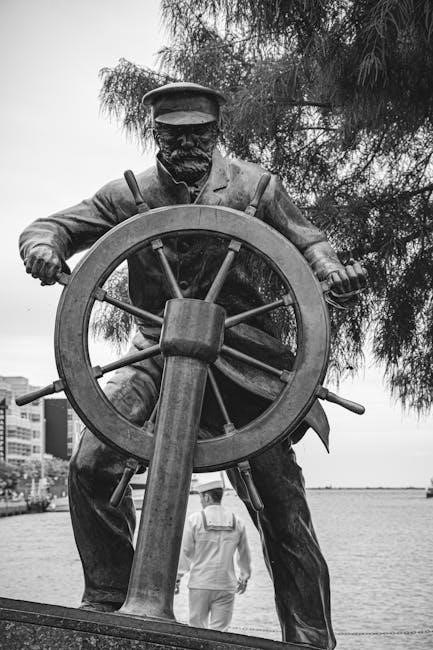
Whitman’s masterful use of extended metaphor—the ship, captain, and voyage—symbolically represents America, Lincoln, and the Civil War, respectively, offering profound insight.
The Ship as America
Within “O Captain! My Captain!”, the ship transcends a mere vessel; it embodies the United States of America itself, navigating the tumultuous waters of the Civil War. This central metaphor anchors the poem’s meaning, representing the nation’s journey through conflict and towards eventual peace. The ship’s successful arrival in port signifies the Union’s victory and the preservation of the nation, a hard-won prize after years of bloodshed and division.
The ship’s physical condition throughout the poem mirrors America’s state during and after the war. The initial struggle and perilous journey reflect the nation’s internal strife and the immense challenges faced during the conflict. The celebratory atmosphere upon reaching port symbolizes the relief and joy experienced by Americans with the war’s end. However, this joy is tragically tempered by the loss of the captain, representing a profound national grief.
Analyzing the ship as America allows readers to understand the poem’s broader scope, moving beyond a simple lament for Lincoln to a meditation on the nation’s collective experience and its enduring spirit. The ship’s resilience and ultimate triumph embody the strength and perseverance of the American people.
The Captain as Abraham Lincoln
Undoubtedly, the “Captain” in Whitman’s poem is a powerful and poignant representation of Abraham Lincoln, the 16th President of the United States. He skillfully guided the nation through the Civil War, embodying leadership, strength, and unwavering dedication to preserving the Union. The Captain’s death, occurring shortly after the war’s end, mirrors Lincoln’s assassination in 1865, plunging the nation into mourning.
The Captain’s role on the ship – steering, guiding, and ensuring its safe arrival – directly parallels Lincoln’s leadership during the war. He was the steadfast hand at the helm, navigating the country through its darkest hours. His “fallen cold and dead” state symbolizes the profound loss felt by a nation deprived of its leader at the moment of victory.
Whitman’s choice to portray Lincoln as the Captain elevates him to a heroic and almost mythical status, immortalizing his legacy and acknowledging the immense sacrifice he made for the country. The poem serves as a heartfelt tribute to a beloved president and a symbol of hope lost.
The Voyage as the Civil War
The perilous “voyage” depicted in Whitman’s poem serves as a compelling metaphor for the American Civil War, a tumultuous and defining period in the nation’s history. The ship itself represents the United States, navigating treacherous waters fraught with conflict, division, and immense suffering. The journey’s length and difficulty mirror the war’s four-year duration and the immense challenges faced by both sides.
The successful arrival at port, despite the dangers encountered, symbolizes the Union’s ultimate victory and the preservation of the nation. However, this triumph is overshadowed by the tragic loss of the Captain, representing Lincoln’s assassination just as peace was achieved. The celebratory atmosphere is tempered by profound grief and a sense of incompleteness.
Whitman masterfully uses the voyage imagery to encapsulate the collective experience of a nation grappling with war, loss, and the complexities of rebuilding. The poem’s emotional resonance stems from its ability to connect the personal tragedy of Lincoln’s death to the broader national trauma of the Civil War.

Analyzing Poetic Form and Structure
Whitman’s poem employs a consistent structure with three quatrains and a concluding couplet, enhancing its emotional impact and rhythmic flow for readers.
The deliberate form amplifies the poem’s themes, offering a structured lament mirroring the nation’s grief and eventual acceptance of loss.
Stanza Structure and Length
“O Captain! My Captain!” is meticulously crafted with a distinct stanzaic structure, comprising three quatrains – stanzas of four lines each – followed by a poignant concluding couplet. This deliberate arrangement isn’t arbitrary; it serves to build emotional intensity and mirror the unfolding narrative of loss and eventual acceptance. Each quatrain focuses on a specific aspect of the central metaphor, progressing from the initial celebration to the devastating realization of the Captain’s death.
The consistent length of the quatrains provides a sense of formal control, contrasting with the overwhelming grief expressed within the verses. This control subtly reflects the nation’s attempt to grapple with immense sorrow. The final couplet, standing apart in its brevity, delivers a concentrated burst of mourning, emphasizing the finality of the Captain’s fall and the enduring weight of the nation’s loss. This structural choice amplifies the poem’s emotional resonance and lasting impact on the reader.
Rhyme Scheme and its Impact
Walt Whitman’s “O Captain! My Captain!” employs a consistent and readily identifiable rhyme scheme of ABCB DEFE GHIG JKLM. This pattern, where the second and fourth lines of each stanza rhyme, creates a musicality that draws the reader into the poem’s emotional core. The alternating rhyme scheme isn’t overly complex, contributing to the poem’s accessibility and ballad-like quality, reminiscent of traditional mourning songs.
The predictable rhyme scheme provides a sense of order amidst the chaos of grief, subtly mirroring the nation’s attempt to find solace and meaning after Lincoln’s assassination. However, the rhymes aren’t always perfect or subtle, sometimes feeling deliberately emphatic, which underscores the intensity of the speaker’s emotions. This interplay between structure and feeling enhances the poem’s overall impact, making it both formally pleasing and deeply moving.
Meter and Rhythm: A Consistent Beat
“O Captain! My Captain!” largely utilizes a trochaic tetrameter, meaning each line predominantly consists of four trochaic feet – a stressed syllable followed by an unstressed one. This creates a falling rhythm, lending the poem a mournful and elegiac tone, effectively mirroring the somber mood surrounding Lincoln’s death. While Whitman isn’t rigidly consistent, the prevailing meter establishes a strong, deliberate pulse throughout the verses.
The consistent rhythm, combined with the regular rhyme scheme, contributes to the poem’s ballad-like quality, making it feel both familiar and emotionally resonant. Variations in the meter, though infrequent, serve to emphasize certain words or phrases, drawing attention to key moments of grief and celebration. This rhythmic structure enhances the poem’s memorability and its power to evoke a shared sense of national mourning and loss.

Key Themes Explored in the Poem
Central themes encompass profound grief, the bittersweet relief of war’s conclusion, and the collective trauma experienced by a nation mourning its fallen leader.
Whitman masterfully portrays America’s conflicted emotions, blending sorrow with a cautious optimism for the future, immortalizing a pivotal moment.
Grief and Mourning

The poem is steeped in a palpable sense of grief, directly responding to the assassination of Abraham Lincoln and the profound loss felt across the nation. Whitman doesn’t shy away from expressing the raw emotional pain, utilizing imagery of death – “fallen cold and dead” – to emphasize the finality of Lincoln’s passing.
This mourning isn’t simply personal; it’s a national lament, reflecting the collective trauma experienced by a country emerging from the brutal Civil War. The speaker’s repeated cries of “O Captain! My Captain!” function as a mournful refrain, echoing the widespread sorrow and disbelief.
The poem’s structure itself mirrors the process of grieving, moving from initial shock and despair to a reluctant acceptance of loss. Analyzing PDF versions reveals how scholars highlight the poem’s power to evoke empathy and understanding for the immense grief experienced during this historical period, solidifying its place as a timeless elegy.
Relief and Celebration of War’s End
Alongside the overwhelming grief, “O Captain! My Captain!” acknowledges the simultaneous relief and celebration surrounding the Union’s victory in the Civil War. The “voyage” is complete, the ship has reached port, and the “prize” has been won – signifying the preservation of the nation.
However, this joy is tragically tempered by Lincoln’s death, creating a complex emotional landscape. The poem captures the nation’s conflicted state, torn between rejoicing in peace and mourning its fallen leader. PDF analyses often emphasize this duality, noting how Whitman skillfully juxtaposes celebratory imagery with expressions of profound sorrow.
The speaker’s initial excitement at the successful voyage quickly gives way to despair upon realizing the Captain will not share in the triumph. Examining annotated PDFs reveals how this contrast underscores the poem’s central theme: victory achieved at a devastating cost, and a nation’s bittersweet moment of closure.
National Loss and Collective Trauma
“O Captain! My Captain!” powerfully embodies the national trauma experienced after Abraham Lincoln’s assassination, representing a collective mourning process for a nation deeply wounded by civil war. PDF resources highlight how Whitman transcends personal grief to articulate a shared sense of loss felt across America.
The poem’s imagery – the fallen captain, the silent ship – symbolizes a nation paralyzed by grief and uncertainty. Analyses within accessible PDFs demonstrate how this resonates with the widespread shock and disbelief following Lincoln’s death, a pivotal moment in American history.
Whitman captures the feeling of disorientation and the struggle to reconcile victory with such a profound loss. Studying annotated PDFs reveals how the poem serves as a cathartic expression of collective trauma, allowing a grieving nation to begin processing its pain and rebuild.

Symbolism and Figurative Language
PDF analyses reveal Whitman’s masterful use of symbolism, like the ship and captain, enriching the poem’s layers of meaning and emotional resonance.
Figurative language, explored in detailed PDFs, amplifies the themes of death, victory, and the profound impact of Lincoln’s tragic end.
The “Prize” Won: Victory and its Cost
Detailed PDF analyses of “O Captain! My Captain!” consistently highlight the complex symbolism surrounding the “prize” – representing the Union’s victory in the Civil War.
However, this triumph is inextricably linked to immense loss, specifically the assassination of Abraham Lincoln, a point emphasized within scholarly PDF resources.
The poem doesn’t present a purely celebratory tone; instead, it juxtaposes the joy of war’s end with the devastating grief over Lincoln’s death, a nuance explored in annotated PDF versions.
PDF guides often dissect how Whitman uses imagery of celebration – “the port is near, the bells I hear” – immediately followed by the Captain’s fall, illustrating victory’s bitter cost.
This deliberate contrast, readily apparent in PDF interpretations, underscores the poem’s central message: even in triumph, profound sorrow can prevail, and the price of freedom is often steep.
Examining the poem through PDF study aids reveals how the “prize” is ultimately tainted by the Captain’s demise, transforming the victory into a mournful occasion.
“Fallen Cold and Dead”: The Finality of Death
PDF analyses of Walt Whitman’s “O Captain! My Captain!” consistently emphasize the stark and irreversible imagery surrounding Lincoln’s death, powerfully conveyed by the phrase “fallen cold and dead.”
Scholarly PDF resources detail how this line signifies the absolute finality of loss, contrasting sharply with the celebratory atmosphere of the ship’s arrival.
Annotated PDF versions often highlight the chilling effect of these words, emphasizing the poem’s shift from hopeful anticipation to profound despair and national mourning.
The phrase isn’t merely descriptive; PDF guides explain it represents the extinguishing of a guiding light, a symbol of hope and leadership lost forever.
Whitman’s deliberate choice of words, as explored in detailed PDF commentaries, underscores the permanence of death and the nation’s collective trauma.
PDF study aids reveal how this imagery resonates deeply, solidifying the poem’s enduring power as a lament for a fallen leader and a nation’s grief.

The Use of Exclamation and Rhetorical Questions
PDF analyses of “O Captain! My Captain!” reveal Whitman’s masterful employment of exclamation points and rhetorical questions to amplify the poem’s emotional intensity.
Detailed PDF guides demonstrate how these devices mirror the speaker’s tumultuous inner state – a blend of joy and overwhelming grief over Lincoln’s assassination.
Annotated PDF versions highlight how rhetorical questions, like those posed throughout the poem, aren’t seeking answers but express profound disbelief and sorrow.
Scholarly PDF resources explain that the frequent use of exclamation marks underscores the urgency and desperation of the speaker’s lament.
These stylistic choices, as explored in comprehensive PDF commentaries, create a dramatic and emotionally charged reading experience for the audience.
PDF study aids emphasize how Whitman’s technique effectively conveys the nation’s collective shock and mourning, solidifying the poem’s lasting impact.

Finding and Accessing “O Captain! My Captain!” PDF Resources
Numerous online repositories and educational websites offer free “O Captain! My Captain!” poem PDFs, ideal for study and annotation purposes.
Printable versions are readily available, facilitating in-depth analysis and a focused learning experience for students and poetry enthusiasts.
Online Repositories for Poetry PDFs
Several dedicated online repositories specialize in providing access to poetry in PDF format, and “O Captain! My Captain!” is frequently featured among their collections. Project Gutenberg, a long-standing initiative, offers a vast library of public domain texts, including Walt Whitman’s complete works, making the poem readily downloadable.
Internet Archive, another invaluable resource, boasts a digitized collection of books and documents, often including annotated editions and critical analyses of classic poems like this one. Poetry Foundation’s website, while primarily focused on online reading, often links to downloadable resources or provides options for creating PDFs of individual poems.
Many university and college library websites also host digital collections of poetry, offering scholarly editions and supplementary materials. A simple online search using keywords like “O Captain! My Captain! PDF download” will reveal a multitude of options, though verifying the source’s credibility is always recommended to ensure accuracy and avoid copyright infringements.
Educational Websites Offering the Poem
Numerous educational websites provide “O Captain! My Captain!” alongside supporting materials designed for student learning. Shmoop and SparkNotes offer detailed analyses, including summaries, character studies (metaphorically, of course), and explanations of poetic devices used by Whitman. These sites often present the poem’s text directly on the page, with options for printing or saving as a PDF via browser functionality.
CliffsNotes provides a concise overview of the poem’s themes and historical context, aiding comprehension for students. LitCharts offers visually engaging analyses, including color-coded breakdowns of literary elements, and often provides downloadable study guides.
Many high school and college English department websites curate resources for commonly studied poems, including “O Captain! My Captain!” – often linking to PDFs or providing downloadable worksheets. These resources are typically designed to facilitate classroom discussion and critical thinking about Whitman’s powerful elegy.
Printable Versions for Study and Annotation
Accessing printable PDF versions of “O Captain! My Captain!” is crucial for effective study and annotation. Many websites offering the poem also provide a print-friendly format, allowing students to mark up the text directly with notes on symbolism, rhyme scheme, and thematic elements.
Downloading a PDF enables offline access, ideal for studying without internet connectivity. This format facilitates close reading, allowing for highlighting key phrases, circling important metaphors, and writing margin notes to deepen understanding of Whitman’s elegy.
Furthermore, printable PDFs are perfect for preparing for essays or exams, as they allow students to easily reference the text while formulating their arguments. Utilizing digital annotation tools on PDFs also offers a modern, paperless approach to literary analysis, preserving notes for future review.